NFPA 70E

NFPA 70E Standard

The National Fire Protection Association (NFPA) published the latest edition of the NFPA 70E Standard (Standard for Electrical Safety Requirements for Employee Workplaces) in 2012. NFPA 70E states, “employees shall wear FR clothing wherever there is a possible exposure to an electric arc flash.” This requires employees working on or near energized parts and equipment to wear flame resistant clothing that meets the requirements of ASTM F1506 and is appropriate to the potential energy of the hazard. Employers are required to perform a flash hazard analysis to determine the potential energy of the hazard and the flash protection boundary. A flash hazard analysis can be performed by calculating the potential incident energy of a piece of equipment or using Hazard/Risk Category Classifications. Protective clothing must meet the calculated incident energy or the corresponding Hazard Risk Category that has an arc rating of at least the value listed in the “Protective Clothing Characteristics” section of the standard (see table below).

Most major companies in the U.S. have some employees that work on or near energized parts and equipment. OSHA considers the NFPA 70E standard a “recognized industry practice.”

Simplify Compliance to NFPA 70E

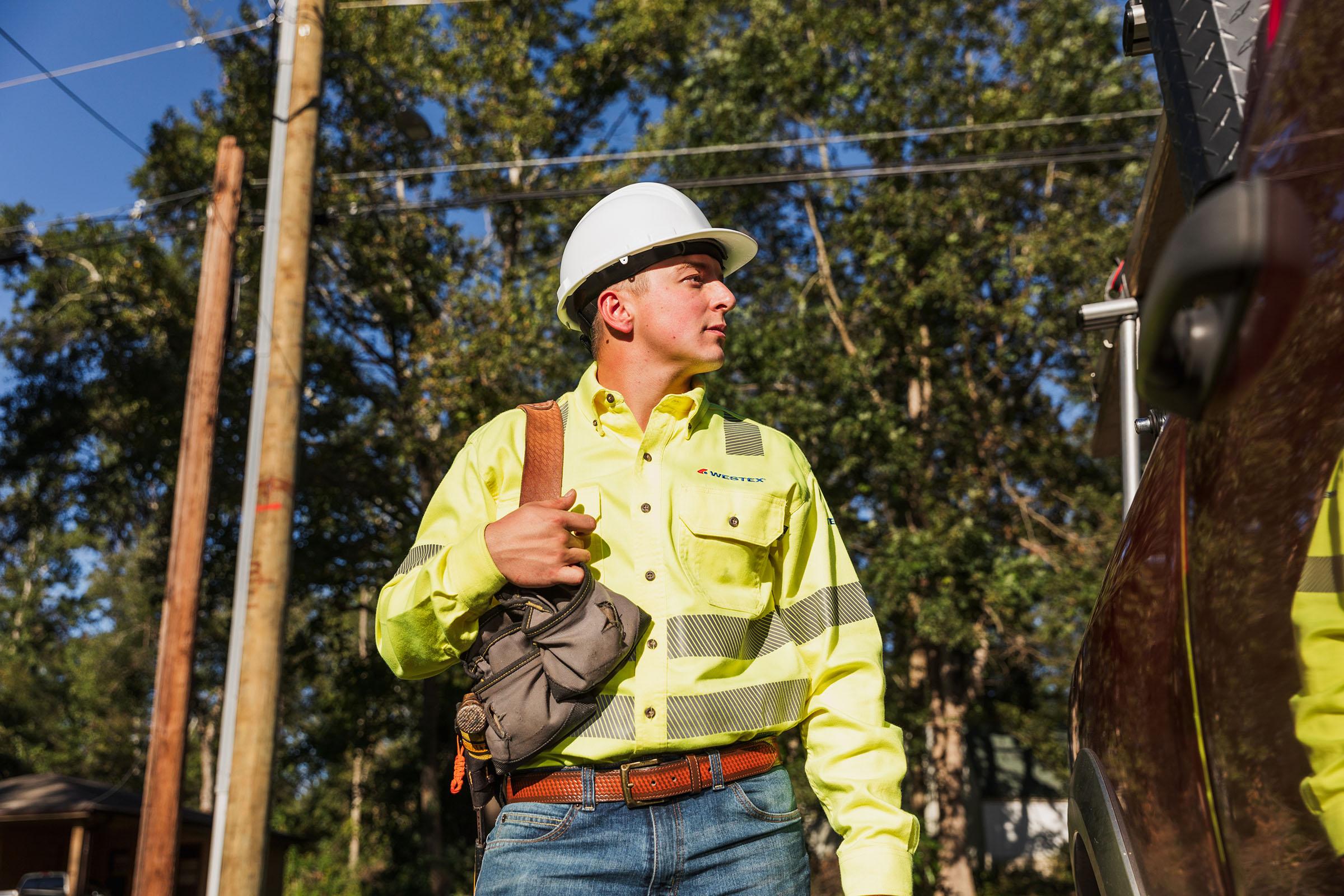
Many companies have decided to simplify compliance to NFPA 70E by implementing everyday uniform programs using Westex garments that meet the requirements of NFPA 70E Hazard Risk Categories (HRC) 0, 1 and 2 as a single-layer (chart listed below). This can alleviate employer concerns about leaving the difficult decision of determining whether a specific routine electrical task is HRC 0, 1 or 2 in the hands of the employee. Please refer to NFPA 70E Annex H Simplified; Two Category, Flame Resistant (FR) Clothing Approach. To supplement everyday uniforms, arc flash suits and hoods in double-layer Westex® UltraSoft®, UltraSoft AC®and Indura® combinations are available for higher energy HRC 3 & 4 level tasks.